Archive for truepath

PREVIEW – Civil War and Crisis in Côte d’Ivoire – An Analysis of the Steps Taken By the International Community To Prevent, Manage and Resolve the Conflict

(C) Kapok Tree Diplomacy. Oct 2010. All rights reserved. Jeff Dwiggins.

Essay consists of 11 pages, double-spaced + 26 references (3,293 words)

Table of Contents (TOC)

I.                 Introduction

A.    Summary of the Sources and Causes of the Conflict

B.    Background

II.              Actions of the Main Actors

A.     France                                               

B.     Burkina Faso

C.     The United Nations (UN)

III.           United Nations Operation in Côte d’Ivoire (UNOCI)

IV.            UN Security Council (UNSC)

A.     ECOWAS and the African Union (AU)

B.     FN Zone Commanders

C.     Independent Electoral Commission (CEI)

D.     President Laurent Gbagbo and his party, the Front Populaire Ivoirian (FPI)

E.     Prime Minister Guillaume Soro and the Forces Nouvelles (FN)

F.     The World Bank (WB)

V.              The Ouagadougou Political Accord (OPA)

A.     Genesis of the OPA

B.     Key Components

PREVIEW

Actions of the Main Actors

FranceAfter a failed military coup on September 19, 2002, France quickly moved 700 troops into Côte d’Ivoire under a 1961 pact obligating it to defend its former colony from any external invasion (Kohler 31). But France also had 16,000 citizens and 210 subsidiaries of French companies (Kohler 31), in addition to $3.5 billion Euros in direct investment in industries like oil, gas, banking, pharmaceuticals and telecommunications to protect (Busch 52). Read more

Civil War and Crisis in Côte d’Ivoire – An Analysis of the Sources and Causes

“Civil War and Crisis in Côte d’Ivoire – An Analysis of the Sources and Causes ” by Kapok Tree Diplomacy

Preview – Civil War and Crisis in Côte d’Ivoire – Table of Contents and Section One

For over twenty years following its independence from France in 1960, Côte d’Ivoire was a rare example of remarkable economic growth and political and social stability in contrast to its poor and often violent and divisive neighbors in the region of West Africa. A complex mix of political, economic and social factors led to a successful military coup d’état in December 1999
and a civil war in November-December 2002 that brought the “Ivorian Miracle” crashing down.


This was followed by several years of “neither peace nor war” where corruption and discrimination were rampant, several peace accords failed, and numerous political groups jockeyed for power. A breakthrough occurred in March 2007 with the signing of the Ouagadougou Peace Accord (OPA) which is still not fully implemented to this day. This analysis
will attempt to primarily answer why the coup and civil war happened, and secondarily, why it took so long to achieve the OPA.

My paper will examine the underlying sources and causes of the coup d’état, the civil war and the protracted stalemate which followed. To understand not only how the conflict emerged but how it was perpetuated for so long, I will explore several political, economic and social and
regional factors that do not appear to be mutually exclusive. Côte d’Ivoire is a genuine multi layered conflict weaving together diverse issues like ethnicity, citizenship, land, immigration policy, natural resource governance and economic and political discrimination.

Free Preview – Civil War and Crisis in Côte d’Ivoire – An Analysis of the Sources and Causes

Civil War and Crisis in Côte d’Ivoire – An Analysis of the Sources and Causes
{(C) Kapok Tree Diplomacy. Oct. 2010. 10 pages double-spaced. 19 references}

Table of Contents

I. Political Sources and Causes
a. Félix Houphouët-Boigny and the Legacy of Authoritarian Rule
b. Henri Bédié, General Robert Gueï and Laurent Gbagbo
c. Concept of Ivoirité
d. Dependency on the State
e. French Involvement
f. Multi-Party Democracy
g. Corruption
h. Political Source and Causes – Summary

II. Economic Sources and Causes
a. Dependence on Agriculture
b. Growth without Development
c. Lack of Investment Capital
d. Structural Adjustments
e. Land Tenure
f. Uneven Development
g. Economic Source and Causes – Summary

III. Social and Ethnic Sources and Causes
a. Foreign Workers
b. Ethnicity
c. Social and Ethnic Sources and Causes – Summary

IV. Regional Sources and Causes
a. Small Arms, Mercenaries and Destabilization
b. Failed Peace Accords

V. Conclusion

I.  Political Sources and Causes

Félix Houphouët-Boigny and the Legacy of Authoritarian Rule. An appropriate place to begin an analysis of the crisis in Côte d’Ivoire is with the man who ruled the country from 1960 – 1993 and his benign authoritarianism. Houphouët-Boigny lured millions of migrant workers to southern cocoa fields in the 60’s and 70’s with a generous citizenship and land ownership package embodied in the premise of “the land belongs to those who work it” (Mimiko 194). Few people complained about the liberal immigration and land ownership policy when Gross Domestic Product (GDP) rose by 8 percent per year on average between 1960 and 1979 while other African nations had minimal or negative growth (Country Studies, “Introduction”).

Houphouët-Boigny held Côte d’Ivoire’s sixty ethnic groups together and kept them relatively happy for over thirty years by rewarding minority groups through a patronage system with prestigious government jobs and positions (Akokpari 97). However, as the abundance of land dwindled and cocoa prices plummeted in the 80’s and 90’s, state wages were cut in half and social dissent escalated dramatically (Guesnet, Muller, & Schure 12). Houphouët-Boigny could no longer patronize all his enemies, and indigenous Ivoirites began seeing their migrant neighbors in a new light. Scarcity began to aggravate ethnic divisions and undermine stability (Klaas 112). Furthermore, Houphouët-Boigny failed to name a successor prior to his death in 1993, creating an unstable situation where his successor, Henri Bédié, had to “legitimize his ascension to power” (Kohler 17).

Free Preview – Civil War and Crisis in Côte d’Ivoire – Table of Contents and Section One

The Last Word on Justice: The Impact of the International Criminal Court On the Future of International Justice and its Rocky Road to Legitimacy

“The Last Word on Justice: The Impact of the International Criminal Court On the Future of International Justice and its Rocky Road to Legitimacy” by Kapok Tree Diplomacy

PREVIEW      Written in August 2010

Section One – History, Structure and Mandate of the ICC

Background.  The United States has supported bringing human rights violators to justice for many decades. After World War I, the Allies charged Kaiser Wilhelm II of Germany in the Versailles Treaty with “a supreme offense against international morality and the sanctity of treaties,” a first in holding a head of state accountable for his actions (Feinstein & Lindberg 23). The Nuremberg and Far East tribunals affirmed “individual culpability for crimes against peace” following World War II by indicting several senior officials in a multinational setting (Fletcher 235).  The UN General Assembly subsequently charged the International Law Commission (ILC) in 1948 with drafting a statute for an international criminal court (Murphy 4). Read more

Challenges to Keeping the Peace in International Law

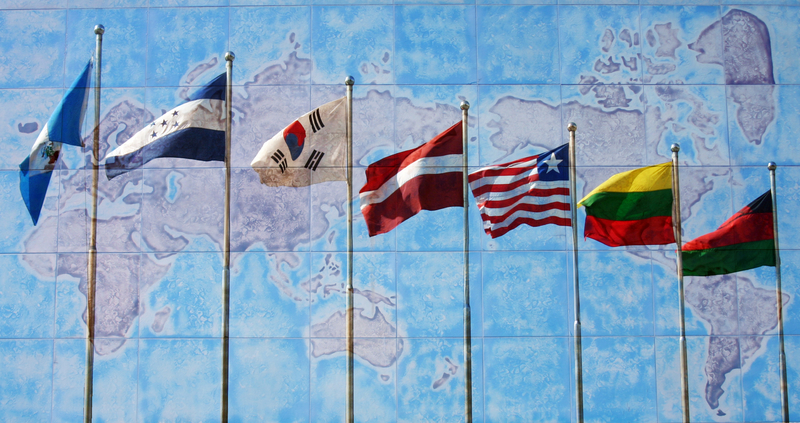
(C) Kapok Tree Diplomacy. August 2010. All rights reserved. By Jeff DwigginsInternational-Law flags

Introduction – FREE CONTENT

The need for a “fundamental institutional arrangement not only to address questions of war and peace and human rights but to develop legal norms in other areas, such as labor, health, and communications,” has enticed the vast majority of states to consent at some level to a growing and complex body of rules and norms designed to serve state interests by securing and furthering a peaceful, prosperous and stable society (Dunoff et. al. 16). Today these norms permeate the mission and operations of numerous international institutions like the United Nations, providing peaceful dispute resolution tools in such diverse areas as trade, military operations and human rights.

While most states desire to live in peace with one another and follow the fundamental norms of international law, a few states and some increasingly dangerous non-state actors like Al- Qaeda prefer to do whatever they want. In his Nobel Peace Prize acceptance speech, U.S. President Barack Obama added, “[the] old architecture is buckling under the weight of new threats … wars between nations have increasingly given way to wars within nations. The resurgence of ethnic or sectarian conflicts; the growth of secessionist movements, insurgencies, and failed states; have increasingly trapped civilians in unending chaos” (Obama 51).

This paper will examine what it means to “keep the peace” in an era of the globalization of world politics and unprecedented challenges and threats. The specific challenges to be addressed include nuclear proliferation, military conflict and terrorism, international trade and economic relations, diminishing natural resources, and humanitarian and human dignity issues. The paper will also examine whether existing international institutions and legal doctrines are likely to resolve the issue, and where are they likely to fall short?

The posts, views and opinions expressed in this post are completely my own and do not represent the views or opinions of the Department of Defense (DoD), the Department of the Navy (DON) or any of the Armed Forces.

Section One – Nuclear Proliferation

Nuclear weapons are able to do far more than disable enemy combatants. They can destroy entire cities and obliterate entire human populations with one powerful blast.  The international community has developed two important treaties, The Treaty on the Non-Proliferation of Nuclear Weapons (NPT) and the Comprehensive Test Ban Treaty (CTBT), to limit proliferation of Weapons of Mass Destruction (WMD), encourage disarmament, and preserve peaceful usage of nuclear energy (Dunoff et. al. 532-533).  Although these treaties have substantial ratifications, their effectiveness is severely limited by holdouts and compliance issues.   Read more

Is International Relations a Science?

(C) Kapok Tree Diplomacy. 2010. All rights reserved. Jeff Dwiggins, author

Is international relations (IR) a science? Well, I guess it depends on what science we’re talking about – physical, biological, social, economic, political?  When I hear the term “science” I still tend to think of what I’m most familiar with, and that is the scientific method used by the natural sciences. Russett and Starr attempt to modify the social science of IR to follow the scientific method using some general general steps  (2004). I would tweak those steps as follows along the natural science format: pose the question, observe, research and analyze, form hypothesis, experiment, gather more data, analyze results, interpret results, form conclusion, retest (“Steps of the Scientific Method”, n.d.).

Can we apply this same scientific method to international relations? Yes, but obtaining the level of accuracy in international relations typically required in biology or physics is not really possible. Human behavior is not as predictable as universal laws and the uniformity of nature. The current rend in IR is to try and make it as predictable as possible by crunching numbers and trying to explain every outcome through quantitative analysis. But state and non-state actors do not always act rationally, nor do they always operate with perfect information and single-minded purpose. “The heart is deceitful above all things and beyond cure. Who can understand it?” (Jer. 17:9).

Russett and Starr talk about science being about “comparison, contingency and probability” (p.19) in order to “define, label and classify” (p. 19). They point out that the analysis should be done in a systematic way in order to make theoretical “generalizations” (p. 20). They do admit the role that assumptions (p. 22), values (p. 26) and uncertainty (p. 19) can play in the overall scientific process as it relates to international relations. That’s good. Here’s a few reasons why.

The facts do not always speak for themselves. In tackling the controversy and diverse theories over the assassination of JFK, the late Christian theologian Greg Bahnsen brilliantly points out that, “What a person will take to be a “fact” and how that fact is interpreted and related to other beliefs is not determined alone by the perceptions or observations (or observation-reports) which a person has. His thinking will be guided by various assumptions or controlling presuppositions” (1992).

What one takes to be factual, as well as the interpretation of accepted facts, will be governed by his underlying philosophy of fact – that is by his “pervasive, basic, value-oriented, possibility determining, probability-rating, sometimes religiously motivated presuppositions” (Bahnsen).

The science of international relations is viewed through the value-oriented assumptions of the person doing the analysis. That frame of reference or lens may be realist, liberal, Marxist, constructionist or some combination thereof. It doesn’t mean the conclusions aren’t scientific to some extent, but we do have to be realistic about their precision and highly scrutinize the underlying values and assumptions that went into the observation and research of pertinent facts in the first place.

If our standard is that international relations (IR) must be able to be categorized, defined, labeled and classified, and that the scientific method may be usefully applied to it, then I would agree that it may share some qualities with the scientific method, though not on the same level as the natural sciences.  Thus, IR is not an exact science despite the claims of many social scientists and academics who try to convince us otherwise.


International Law’s Expansion into Individual Affairs: A Tug of War over Tradition, Jurisdiction and Universal Human Rights

Introduction – (C) Kapok Tree Diplomacy, July 2010, All rights reserved. Jeff Dwiggins, author.

FREE CONTENTFort Derussy Park, Honolulu

As international law extends beyond traditional state-to-state interactions into matters directly involving the rights and wrongs of individuals, its pervasive encroachment directly collides with domestic law on important issues of supremacy, customary norms, jurisdiction, human rights and sovereign immunity. Courts often struggle to navigate the chasm between the two realms of international and domestic law and produce cogent, universally accepted decisions that fall within uncontested limitations and clear jurisdictions.

This paper will explore the challenges, benefits and trade-offs of a non-traditional application of international law in cases involving individuals where the dynamics of tradition, jurisdiction and human rights interact in overlapping spheres of domestic and international law, producing a compelling tug of war between competing interests.  I’ll begin by examining the issue of international and universal human rights.

The posts, views and opinions expressed on this site are completely my own and do not represent the views or opinions of the Department of Defense (DoD), the Department of the Navy (DON) or any of the Armed Forces.

Section One – International Human Rights v. The Interests of States

The Preamble of the United Nations (UN) Charter calls upon member states to “reaffirm faith in fundamental human rights, in the dignity and worth of the human person, in the equal rights of men and women and of nations large and small,” while Articles 55 encourages member states to promote “universal respect for, and observance of, human rights and fundamental freedoms for all without distinction as to race, sex, language, or religion” (“Preamble” and “Chapter IX”). A thorough reading of the Charter, however, doesn’t uncover any definition or mandate for human rights which has complicated a universal embrace of uniform standards for human rights. Read more

%d