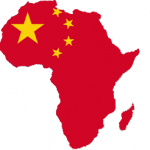
“The Genuine Nature of Chinese Intentions in Sub-Saharan Africa – Peaceful Coexistence or New World Order?” by Kapok Tree Diplomacy
PREVIEW includes a Table of Contents. Complete essay is 5,920 words, 20 pages double-spaced, 29 references. Kapok Tree Diplomacy. May 2010.
Table of Contents
I. Period Summaries of Growing China-Africa Partnership
A. Period of 1950 – 1989
B. Period of 1990 – 1999
C. Period of 2000 to the Present
II. China’s Mercantilist Intentions
A. State Capitalism
B. Trade Ownership Export Strategy
C. Application of the Beijing Consensus in Africa
D. Soft Power
E. National Security
F. Beijing’s New World Order
III. Problems with Peaceful Coexistence – Resistance and Contradictions
A. African Resistance and Unkept Promises
B. Contradictions with China’s Fulfillment of the Five Principles of Peaceful Coexistence
IV. Conclusions
Kapok Tree Diplomacy 22 May 2010
The Genuine Nature of Chinese Intentions in Sub-Saharan Africa – Peaceful Coexistence or New World Order?
This research paper will explore Chinese intentions in sub-Saharan Africa. It will analyze the following topics in context to China’s involvement with Africa: the ideological foundation of the Beijing Consensus; China’s trade and mercantilist development policies; the military and national security aspects of China’s activities; its strategic use of soft power and diplomacy; China’s push for a reconfigured, multi-polar world order, and the implications of this order and policies for Western nations, especially the United States.
By carefully substituting national economic rights for individual human rights and non- interference over ethics and transparency, China imposes its own brand of neomercantilism and no-strings-attached foreign aid, making sure it obtains substantially more relative gains than Africa despite its constant ‘win-win’ rhetoric and assertions of equal partnership. The main thesis of this paper is that while China simultaneously and deftly pursues an aggressive geoeconomic and geopolitical strategy that seeks to counter Western global influence by cultivating an attractive, scalable model of strategic partnership in sub-Saharan Africa based on Eastern values of peaceful coexistence and non-interference, the inherent contradictions and values within this strategy undermine democracy, human rights, governmental stability, state sovereignty and long-term economic viability in Africa.
The thread of China’s geo-economic goals of securing important supplies of natural resources to feed its growing economy and enhance its global economic sphere of influence and its geopolitical goals of strengthening its leverage, interests and security within the international order will be explored throughout the paper. The first section will trace the roots of the China- Africa partnership through modern times. The second section will cover the components of China’s complex strategy: state capitalism, a mercantilist export strategy, the Beijing Consensus and foreign policy, soft power, security implications and China’s expressed desire for a new world order. The third section will cover inherent contradictions within China’s strategy as well as African resistance to it. This paper will conclude with the assertion that genuine Chinese intentions are not completely benign, but instead primarily serve national interests and mask realist aspirations for greater power and leadership on a dramatically redefined world stage.
Section One – Period Summaries of Growing China-Africa Partnership
Period of 1950 – 1989.
Kieran Uchehara describes three distinct periods in the growing China- Africa partnership beginning in the 1950’s and 1960’s when China supported several nationalist movements in African states who were striving for independence, followed by China’s procurement of a permanent seat on the United Nations (UN) Security Council, and concluding with the recent “liberalization and subsequent growth of the Chinese economy,” especially after the civilian uprising at Tiananmen Square in 1989 (96-97). An important component of the ideological roots of China’s partnership with Africa was solidified during the first phase, South- South cooperation and resistance to Western hegemony.
This ideological thread formally emerged during the Bandung Conference which was held in 1955 and attended by 29 Asian and African nations (Uchehara 96). “Colonialism, imperialism and the hegemonic position of the Western powers” were main topics on the economic and cultural agenda (Uchehara 96). It was during this conference that the Five Principles of Peaceful Coexistence that would become a major foundation of China’s soft power impetus were adopted by China and Africa: (1) mutual respect for political and economic sovereignty; (2) mutual non-interference in internal affairs; (3) equality and mutual benefit; (4) peaceful resolution of conflicts; and (5) equal and fair representation in world affairs (Mensah 98). Mensah also notes that while China is often lauded for its respect for sovereignty and non- interference, multilateral cooperation with African nations is conditioned by one important principle: adhere to the one China policy and reject official relations with Taiwan “which its views as a rogue or renegade province (98).
China increased diplomatic visits, sold military equipment, and provided some agricultural and medical aid to Africa in the 1970’s and 1980’s, while also constructing some first-class infrastructure projects including the 1,860-km Tanzania-Zambia (TanZam) Railway for about $455 million in 1976 (Meidan 74), the largest foreign-aid project China had undertaken to date. Michal Meidan explains that China turned inward in the 1980’s to modernize and beef up its economy to compete with the West, effectively putting Africa on the back burner (74-76).
The events at Tiananmen Square, however, served to turn China’s focus on Africa “from one of benign neglect to one of renewed emphasis” as Western nations condemned Chinese Communist Party leadership, whom Naidu et al. asserts were caught “off-guard” and “demeaned” by the “sharp focus on human rights” (89-91). Several African nations had their own issues with human rights abuse and did not want to jeopardize important foreign aid from China although it was declining at the time (Naidu et. al. 91). Africa’s moot response to Tiananmen and China’s presumption of Western interference in its affairs resulted in the perfect storm that strengthened political and economic ties and ignited China’s “diplomatic charm offensive” in Africa to “push for a multipolar world order that resisted Western (U.S.) hegemony” (Naidu et. al. 91). The relationship would become more economically pragmatic in the 1990’s while retaining its ideological core.
Period of 1990 – 1999.
As China gradually adopted some liberal reforms in its economy in the 1990’s, its GDP grew by an average annual rate of 9.5% annually (Spero and Hart 407) and so did its thirst for oil. The Trade Law Center for Southern Africa (Tralac) reports that bilateral trade between China and Africa grew from $3.9B to $6.5B between 1995 and 1999 and imports of crude oil went from $258M to $875M in that same timeframe, though soaring to $3.6B in 2000 (“Total Trade” tab, 2010). China’s indigenous sources of oil are stagnant with annual growth of 2% a year versus soaring demand of 10% a year (Meidan 77).
Read more
Like this:
Like Loading...

 w has evolved into a growing and complex body of rules and norms that states consent to based upon their concrete interests in a peaceful, prosperous and stable society. While international law differs and often competes substantively from municipal law, international law plays a predominantly positive role in allowing nations to benefit from the binding obligations derived from its sources. This essay will cover a brief history and definition of international law in Section One to include its sources and evidences followed by a comparison of international law with municipal law in Section Two with an emphasis on treaties. The paper will conclude with some observations on how well the framework of international law actually works.