Archive for International Relations

The Last Word on Justice: The Impact of the International Criminal Court On the Future of International Justice and its Rocky Road to Legitimacy

“The Last Word on Justice: The Impact of the International Criminal Court On the Future of International Justice and its Rocky Road to Legitimacy” by Kapok Tree Diplomacy

PREVIEW      Written in August 2010

Section One – History, Structure and Mandate of the ICC

Background.  The United States has supported bringing human rights violators to justice for many decades. After World War I, the Allies charged Kaiser Wilhelm II of Germany in the Versailles Treaty with “a supreme offense against international morality and the sanctity of treaties,” a first in holding a head of state accountable for his actions (Feinstein & Lindberg 23). The Nuremberg and Far East tribunals affirmed “individual culpability for crimes against peace” following World War II by indicting several senior officials in a multinational setting (Fletcher 235).  The UN General Assembly subsequently charged the International Law Commission (ILC) in 1948 with drafting a statute for an international criminal court (Murphy 4). Read more

Challenges to Keeping the Peace in International Law

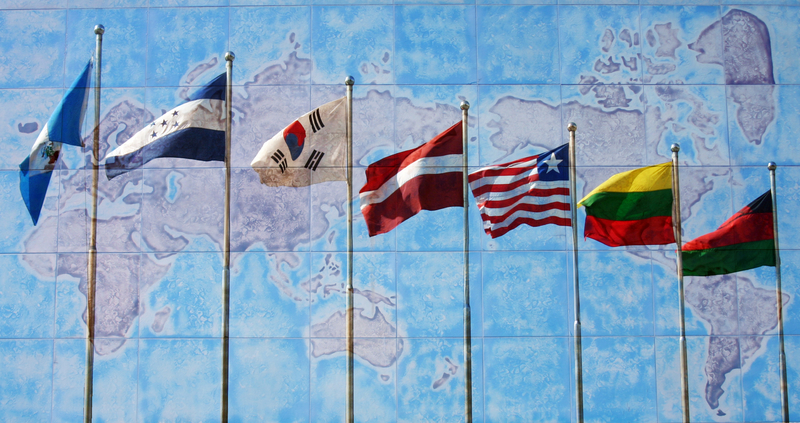
(C) Kapok Tree Diplomacy. August 2010. All rights reserved. By Jeff DwigginsInternational-Law flags

Introduction – FREE CONTENT

The need for a “fundamental institutional arrangement not only to address questions of war and peace and human rights but to develop legal norms in other areas, such as labor, health, and communications,” has enticed the vast majority of states to consent at some level to a growing and complex body of rules and norms designed to serve state interests by securing and furthering a peaceful, prosperous and stable society (Dunoff et. al. 16). Today these norms permeate the mission and operations of numerous international institutions like the United Nations, providing peaceful dispute resolution tools in such diverse areas as trade, military operations and human rights.

While most states desire to live in peace with one another and follow the fundamental norms of international law, a few states and some increasingly dangerous non-state actors like Al- Qaeda prefer to do whatever they want. In his Nobel Peace Prize acceptance speech, U.S. President Barack Obama added, “[the] old architecture is buckling under the weight of new threats … wars between nations have increasingly given way to wars within nations. The resurgence of ethnic or sectarian conflicts; the growth of secessionist movements, insurgencies, and failed states; have increasingly trapped civilians in unending chaos” (Obama 51).

This paper will examine what it means to “keep the peace” in an era of the globalization of world politics and unprecedented challenges and threats. The specific challenges to be addressed include nuclear proliferation, military conflict and terrorism, international trade and economic relations, diminishing natural resources, and humanitarian and human dignity issues. The paper will also examine whether existing international institutions and legal doctrines are likely to resolve the issue, and where are they likely to fall short?

The posts, views and opinions expressed in this post are completely my own and do not represent the views or opinions of the Department of Defense (DoD), the Department of the Navy (DON) or any of the Armed Forces.

Section One – Nuclear Proliferation

Nuclear weapons are able to do far more than disable enemy combatants. They can destroy entire cities and obliterate entire human populations with one powerful blast.  The international community has developed two important treaties, The Treaty on the Non-Proliferation of Nuclear Weapons (NPT) and the Comprehensive Test Ban Treaty (CTBT), to limit proliferation of Weapons of Mass Destruction (WMD), encourage disarmament, and preserve peaceful usage of nuclear energy (Dunoff et. al. 532-533).  Although these treaties have substantial ratifications, their effectiveness is severely limited by holdouts and compliance issues.   Read more

Is International Relations a Science?

(C) Kapok Tree Diplomacy. 2010. All rights reserved. Jeff Dwiggins, author

Is international relations (IR) a science? Well, I guess it depends on what science we’re talking about – physical, biological, social, economic, political?  When I hear the term “science” I still tend to think of what I’m most familiar with, and that is the scientific method used by the natural sciences. Russett and Starr attempt to modify the social science of IR to follow the scientific method using some general general steps  (2004). I would tweak those steps as follows along the natural science format: pose the question, observe, research and analyze, form hypothesis, experiment, gather more data, analyze results, interpret results, form conclusion, retest (“Steps of the Scientific Method”, n.d.).

Can we apply this same scientific method to international relations? Yes, but obtaining the level of accuracy in international relations typically required in biology or physics is not really possible. Human behavior is not as predictable as universal laws and the uniformity of nature. The current rend in IR is to try and make it as predictable as possible by crunching numbers and trying to explain every outcome through quantitative analysis. But state and non-state actors do not always act rationally, nor do they always operate with perfect information and single-minded purpose. “The heart is deceitful above all things and beyond cure. Who can understand it?” (Jer. 17:9).

Russett and Starr talk about science being about “comparison, contingency and probability” (p.19) in order to “define, label and classify” (p. 19). They point out that the analysis should be done in a systematic way in order to make theoretical “generalizations” (p. 20). They do admit the role that assumptions (p. 22), values (p. 26) and uncertainty (p. 19) can play in the overall scientific process as it relates to international relations. That’s good. Here’s a few reasons why.

The facts do not always speak for themselves. In tackling the controversy and diverse theories over the assassination of JFK, the late Christian theologian Greg Bahnsen brilliantly points out that, “What a person will take to be a “fact” and how that fact is interpreted and related to other beliefs is not determined alone by the perceptions or observations (or observation-reports) which a person has. His thinking will be guided by various assumptions or controlling presuppositions” (1992).

What one takes to be factual, as well as the interpretation of accepted facts, will be governed by his underlying philosophy of fact – that is by his “pervasive, basic, value-oriented, possibility determining, probability-rating, sometimes religiously motivated presuppositions” (Bahnsen).

The science of international relations is viewed through the value-oriented assumptions of the person doing the analysis. That frame of reference or lens may be realist, liberal, Marxist, constructionist or some combination thereof. It doesn’t mean the conclusions aren’t scientific to some extent, but we do have to be realistic about their precision and highly scrutinize the underlying values and assumptions that went into the observation and research of pertinent facts in the first place.

If our standard is that international relations (IR) must be able to be categorized, defined, labeled and classified, and that the scientific method may be usefully applied to it, then I would agree that it may share some qualities with the scientific method, though not on the same level as the natural sciences.  Thus, IR is not an exact science despite the claims of many social scientists and academics who try to convince us otherwise.


International Law’s Expansion into Individual Affairs: A Tug of War over Tradition, Jurisdiction and Universal Human Rights

Introduction – (C) Kapok Tree Diplomacy, July 2010, All rights reserved. Jeff Dwiggins, author.

FREE CONTENTFort Derussy Park, Honolulu

As international law extends beyond traditional state-to-state interactions into matters directly involving the rights and wrongs of individuals, its pervasive encroachment directly collides with domestic law on important issues of supremacy, customary norms, jurisdiction, human rights and sovereign immunity. Courts often struggle to navigate the chasm between the two realms of international and domestic law and produce cogent, universally accepted decisions that fall within uncontested limitations and clear jurisdictions.

This paper will explore the challenges, benefits and trade-offs of a non-traditional application of international law in cases involving individuals where the dynamics of tradition, jurisdiction and human rights interact in overlapping spheres of domestic and international law, producing a compelling tug of war between competing interests.  I’ll begin by examining the issue of international and universal human rights.

The posts, views and opinions expressed on this site are completely my own and do not represent the views or opinions of the Department of Defense (DoD), the Department of the Navy (DON) or any of the Armed Forces.

Section One – International Human Rights v. The Interests of States

The Preamble of the United Nations (UN) Charter calls upon member states to “reaffirm faith in fundamental human rights, in the dignity and worth of the human person, in the equal rights of men and women and of nations large and small,” while Articles 55 encourages member states to promote “universal respect for, and observance of, human rights and fundamental freedoms for all without distinction as to race, sex, language, or religion” (“Preamble” and “Chapter IX”). A thorough reading of the Charter, however, doesn’t uncover any definition or mandate for human rights which has complicated a universal embrace of uniform standards for human rights. Read more

The Efficacy of the Modern Institution of International Law

“The Efficacy of the Modern Institution of International Law ” by Kapok Tree Diplomacy

PREVIEW

Introduction

International laDoha Roundw has evolved into a growing and complex body of rules and norms that states consent to based upon their concrete interests in a peaceful, prosperous and stable society. While international law differs and often competes substantively from municipal law, international law plays a predominantly positive role in allowing nations to benefit from the binding obligations derived from its sources. This essay will cover a brief history and definition of international law in Section One to include its sources and evidences followed by a comparison of international law with municipal law in Section Two with an emphasis on treaties.  The paper will conclude with some observations on how well the framework of international law actually works.

Section One – A Brief History and Definition of International Law

HistoryThe modern institution of international law has its historical roots in the sixteenth and seventeenth centuries with the evolution of the nation state in Europe.  Werner Levi notes, “The feudalistic entities with their relatively uncertain borders gave way to states based upon sharply defined territory” (qtd. in Dunoff, Ratner, & Wippman 5).  As states emerged, the need to communicate and coordinate according to definitive norms and principles also emerged as well as the need to delineate authoritative boundaries and interpret binding obligations.

The authority to rule over these sovereign territories was originally understood as a “divine right” proceeding from God or natural law, “a set of divinely ordained principles of state conduct, accessible to all endowed with right reason” (Reus-Smit 282).  Through influential philosophers like Hugo Grotius and Alberico Gentili, the concept of “positive law,” created by humans and practiced by states, began to take its place alongside and even supplant natural law as the primary basis for international law (Dunoff, Ratner, & Wippman 6). Read more

Dominant Issues in Free Trade and the International Economic System

Jeff Dwiggins:    Kapok Tree Diplomacy. All rights reserved. March 2010.

Dominant Issues in Free Trade and the International Economic System –  FREE CONTENTDoha Round

This study will analyze some of the most important themes of global trade beginning with the effects of globalization and interdependence on developed and developing countries and the benefits of trade liberalization.  Institutional leadership and governance are discussed, and the argument is made for free trade over protectionism with the caveat that protectionism may have a place in the strategies of developing countries.  The paper reviews the advantages of bilateral over multilateral agreements, the impact of technology on the diversification of trade, and how the elimination of barriers to trade and agreement on certain agricultural issues and subsidies would open up free trade to more players. The paper concludes by offering differing opinions on how best to help developing nations.

The views and opinions expressed in this paper are completely my own and do not represent the views or opinions of the Department of Defense (DoD), the Department of the Navy (DON) or any of the Armed Forces.

Section One – Globalization and Interdependence

The National Intelligence Council (NIC) describes globalization as a “growing interconnectedness reflected in the expanded flows of information, technology, capital, goods, services and people throughout the world” (“2020 Project”). One way this growing interconnectedness has manifests itself is in the sheer size of the world economy and the number of new economic powerhouses rising to prominent places on the global stage. The NIC states, “The world economy is projected to be about 80 percent larger in 2020 than it was in 2000, and average per capita income to be about 50 percent higher” (“2020 Project”).   Read more

Global Integration as Seen Through the Ideological Lenses of the International Political Economy

“Global Integration as Seen Through the Lenses of the Ideologies of the International Political Economy” by Kapok Tree Diplomacy

Preview                                              Written April 2010

Section One – Conceptions of IPE

Main Actors and Their Goals. Dunne and Schmidt state that “Realism identifies the group as the fundamental unit of political analysis” and “the state as the legitimate representative of the people” (93), while other actors such as international organizations (IGOs) or multinational corporations (MNCs) have lesser prominence (103). Realists view the international system as competitive and inherently anarchic, thus driving states to “simultaneously pursue wealth and national power” under the principle of self-help (Gilpin 425). Some realists argue that states are power maximizers, while others argue they are security maximizers (Dunne & Schmidt 101). The end goal in either case is survival, and economic success is central to each strategy.

Liberals position the “individual consumer, firm, or household” as the main actor within IPE. Gilpin asserts that the “primary objective of economic activity (for liberals) is to benefit consumers” by using free market principles for “organizing and managing a market economy in order to achieve maximum efficiency, economic growth and individual welfare” (421). Goal attainment is furthered by these actors peacefully cooperating in a way that allows supply and demand to settle into a natural, stable equilibrium (Gilpin 422). Other groups like IGOs and MNCs compete for centrality with states “through multiple channels of interaction”(Dunne 115).

The main actors within Marxism are social classes, principally the bourgeoisie upper class who owns the economic means of production and the proletariat lower class who works for the bourgeoisie (Lynch 537-539). The goal of the bourgeoisie is wealth accumulation for themselves and increasing power and profits for their class while subjugating the proletariat in the process. Gilpin notes that Lenin reformulated Marxism to the extent that “the principal actors in effect became competing mercantilistic nation-states driven by economic necessity” (430). Whether the main actors be classes or states, the goal is the same in Marxism – maximization of elitist interests.

Policies and Views on International Relations.  Gilpin asserts that the “foremost objective of nationalists is industrialization” as it is the “basis of military power and central to national security” (“Three” 425). Realists, or economic nationalists or mercantilists (as referred to in IPE terminology), also emphasize national self-sufficiency which may result in protectionist measures to insulate infant or declining industries (Gilpin,”Three”, 426).  James Fallows points out how politics drives economics in nationalism by comparing it to liberalism and illustrating the importance of “deliberate development,” production over consumption, results over process, “business as war” over “business as peace,” and national interests over individual interests (61-87). In realism, states seek to maximize their sovereign independence through wealth and power.

%d bloggers like this: