Archive for International Relations

How Some Aspects of the International Economic System Impede and Some Enable Global Integration

“How Aspects of the International Economic System Impede or Enable Global Integration” by Kapok Tree Diplomacy

Download the essay here: https://kapoktreediplomacy.com/hp_wordpress/wp-content/uploads/2018/12/Aspects_of_Intl_System_that_Impede_or_Enable_Global_Integration_Dwiggins.pdf

Beyond Anarchy: How Wendt’s Social Constructivism and Cox’s Historical Materialism Redefine the International System and State Identities While Explaining Structural Transformation

Jeff Dwiggins – Kapok Tree Diplomacy – Feb. 2010 – All rights reserved.Jeff in Singapore

FREE CONTENT

The dominant and mainstream theories of world politics explain both changes to the international system and the unique identities, interests and actions of its actors in context to the conditions of anarchy, rationality, the system’s particular structure, and the material capabilities or preferences of its actors. While realists, neorealists, liberals and neoliberals have their differences, they all explain structural transformation and state identity without appealing to social forces or domestic politics in a significant way.

Alexander Wendt’s theory of “social constructivism” and Robert Cox’s “historical materialism” provide alternative perspectives that assign greater importance to social forces which address the fundamental structure of the international system and their potential to shape the identities, interests and actions of actors.

How do these alternative theories redefine the international system and state identities and explain structural transformation? This essay will answer that question by analyzing the views of Wendt and Cox in detail, explaining how they differ from realist, neorealist and neoliberal views, and determining whether or not they improve upon those theories.  I will begin with Wendt’s theory of social constructivism. Read more

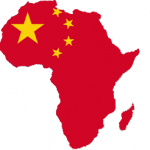
The Genuine Nature of Chinese Intentions in Sub-Saharan Africa – Peaceful Coexistence or New World Order?

“The Genuine Nature of Chinese Intentions in Sub-Saharan Africa – Peaceful Coexistence or New World Order?” by Kapok Tree Diplomacy

PREVIEW    includes a Table of Contents. Complete essay is 5,920 words, 20 pages double-spaced, 29 references. Kapok Tree Diplomacy. May 2010.

Table of Contents

I.  Period Summaries of Growing China-Africa Partnership

A.  Period of 1950 – 1989

B.  Period of 1990 – 1999

C.  Period of 2000 to the Present

II.  China’s Mercantilist Intentions

A.  State Capitalism

B.  Trade Ownership Export Strategy

C.  Application of the Beijing Consensus in Africa

D.  Soft Power

E.  National Security

F.  Beijing’s New World Order

III.  Problems with Peaceful Coexistence – Resistance and Contradictions

A.  African Resistance and Unkept Promises

B.  Contradictions with China’s Fulfillment of the Five Principles of Peaceful Coexistence

IV.  Conclusions

Kapok Tree Diplomacy 22 May 2010  

The Genuine Nature of Chinese Intentions in Sub-Saharan Africa – Peaceful Coexistence or New World Order?  

This research paper will explore Chinese intentions in sub-Saharan Africa. It will analyze the following topics in context to China’s involvement with Africa: the ideological foundation of the Beijing Consensus; China’s trade and mercantilist development policies; the military and national security aspects of China’s activities; its strategic use of soft power and diplomacy; China’s push for a reconfigured, multi-polar world order, and the implications of this order and policies for Western nations, especially the United States.  

By carefully substituting national economic rights for individual human rights and non- interference over ethics and transparency, China imposes its own brand of neomercantilism and no-strings-attached foreign aid, making sure it obtains substantially more relative gains than Africa despite its constant ‘win-win’ rhetoric and assertions of equal partnership. The main thesis of this paper is that while China simultaneously and deftly pursues an aggressive geoeconomic and geopolitical strategy that seeks to counter Western global influence by cultivating an attractive, scalable model of strategic partnership in sub-Saharan Africa based on Eastern values of peaceful coexistence and non-interference, the inherent contradictions and values within this strategy undermine democracy, human rights, governmental stability, state sovereignty and long-term economic viability in Africa.  

The thread of China’s geo-economic goals of securing important supplies of natural resources to feed its growing economy and enhance its global economic sphere of influence and its geopolitical goals of strengthening its leverage, interests and security within the international order will be explored throughout the paper. The first section will trace the roots of the China- Africa partnership through modern times. The second section will cover the components of China’s complex strategy: state capitalism, a mercantilist export strategy, the Beijing Consensus and foreign policy, soft power, security implications and China’s expressed desire for a new world order. The third section will cover inherent contradictions within China’s strategy as well as African resistance to it. This paper will conclude with the assertion that genuine Chinese intentions are not completely benign, but instead primarily serve national interests and mask realist aspirations for greater power and leadership on a dramatically redefined world stage.  

Section One – Period Summaries of Growing China-Africa Partnership  

Period of 1950 – 1989.  

Kieran Uchehara describes three distinct periods in the growing China- Africa partnership beginning in the 1950’s and 1960’s when China supported several nationalist movements in African states who were striving for independence, followed by China’s procurement of a permanent seat on the United Nations (UN) Security Council, and concluding with the recent “liberalization and subsequent growth of the Chinese economy,” especially after the civilian uprising at Tiananmen Square in 1989 (96-97). An important component of the ideological roots of China’s partnership with Africa was solidified during the first phase, South- South cooperation and resistance to Western hegemony.  

This ideological thread formally emerged during the Bandung Conference which was held in 1955 and attended by 29 Asian and African nations (Uchehara 96). “Colonialism, imperialism and the hegemonic position of the Western powers” were main topics on the economic and cultural agenda (Uchehara 96). It was during this conference that the Five Principles of Peaceful Coexistence that would become a major foundation of China’s soft power impetus were adopted by China and Africa: (1) mutual respect for political and economic sovereignty; (2) mutual non-interference in internal affairs; (3) equality and mutual benefit; (4) peaceful resolution of conflicts; and (5) equal and fair representation in world affairs (Mensah 98). Mensah also notes that while China is often lauded for its respect for sovereignty and non- interference, multilateral cooperation with African nations is conditioned by one important principle: adhere to the one China policy and reject official relations with Taiwan “which its views as a rogue or renegade province (98).  

China increased diplomatic visits, sold military equipment, and provided some agricultural and medical aid to Africa in the 1970’s and 1980’s, while also constructing some first-class infrastructure projects including the 1,860-km Tanzania-Zambia (TanZam) Railway for about $455 million in 1976 (Meidan 74), the largest foreign-aid project China had undertaken to date. Michal Meidan explains that China turned inward in the 1980’s to modernize and beef up its economy to compete with the West, effectively putting Africa on the back burner (74-76).  

The events at Tiananmen Square, however, served to turn China’s focus on Africa “from one of benign neglect to one of renewed emphasis” as Western nations condemned Chinese Communist Party leadership, whom Naidu et al. asserts were caught “off-guard” and “demeaned” by the “sharp focus on human rights” (89-91). Several African nations had their own issues with human rights abuse and did not want to jeopardize important foreign aid from China although it was declining at the time (Naidu et. al. 91). Africa’s moot response to Tiananmen and China’s presumption of Western interference in its affairs resulted in the perfect storm that strengthened political and economic ties and ignited China’s “diplomatic charm offensive” in Africa to “push for a multipolar world order that resisted Western (U.S.) hegemony” (Naidu et. al. 91). The relationship would become more economically pragmatic in the 1990’s while retaining its ideological core.  

Period of 1990 – 1999.  

As China gradually adopted some liberal reforms in its economy in the 1990’s, its GDP grew by an average annual rate of 9.5% annually (Spero and Hart 407) and so did its thirst for oil. The Trade Law Center for Southern Africa (Tralac) reports that bilateral trade between China and Africa grew from $3.9B to $6.5B between 1995 and 1999 and imports of crude oil went from $258M to $875M in that same timeframe, though soaring to $3.6B in 2000 (“Total Trade” tab, 2010). China’s indigenous sources of oil are stagnant with annual growth of 2% a year versus soaring demand of 10% a year (Meidan 77).  

Read more

The Limitations of Classical Realism

“The Limitations of Classical Realism” by Kapok Tree Diplomacy

To what extent has neo-realism addressed the limitations of classical realism, if there be any, and overcome them or not? The following analytical essay shall engage this question by exploring each theory’s core assumptions and then review the effect of these assumptions on key areas of understanding international relations to include philosophical perspective, definitions of power and security, the role of anarchy and rationality, the distribution of capabilities and balance of power, and a definition of the international system.

The essay will conclude by bringing both theories’ assumptions to bear upon the current crisis between the United States and Iran. Given the assumptions, I will draw conclusions as to which theory most accurately ascertains the situation and which is more likely to predict the outcome.

The Extent That Theories of Cooperation Harmonize With Reality in Contemporary International Relations

January 30, 2010 – Jeffrey R. Dwiggins, Copyright, Kapok Tree Diplomacy –

FREE CONTENT

The Extent That Theories of Cooperation Harmonize With Reality in Contemporary International Relations

International relations theorists have presented distinctly different views on both the prospects for cooperation among states and the environmental and structural constraints impeding it for decades. This essay will explain and analyze the main views put forth in Robert Keohane‘s Regime and Complex Interdependency Theory, Bruce Russett’s Democratic Peace Theory, David Held’s democratization of global politics, and conclude with Robert Jervis’s ideas on the effectiveness of creating institutions to increase cooperation.

The views of Jervis will bring us full circle with realist and neo-realist views of cooperation. Throughout the essay, I will assess to what extent the arguments of these theorists are convincing. Do these theories of cooperation harmonize with reality in contemporary international relations? The following essay will explain how and why they do, and in other cases how and why they do not.

Theories of Cooperation

Keohane – Regimes and Complex Interdependency Theory.  Keohane defines cooperation as occurring when “actors adjust their behavior to the actual or anticipated preferences of others, through a process of policy coordination” (“Cooperation” 491).  The definition leaves some room for why actors would adjust their behavior at all.  Keohane implies that the answer is found in mutual interests that are of equal importance (“Cooperation” 490). When such mutual interests are present, actors will want to bargain and negotiate as opposed to the manipulation and coercion that prevail under divergent interests and lead to strife. Read more

Applying Domestic-Level Variables in Context to Relative Gains, Reciprocity and Anarchic Concepts to Examine Institutional Cooperation in the Middle East

In my initial studies of international relations and world politics through the mainstream theoretic lenses, the idea that “liberal” institutions operating within the anarchic structure of the international system can facilitate cooperation and reduce the likelihood of conflict has deeply intrigued me.  The increasing societal interconnectedness brought about by globalization personalizes the hope that such institutions may offer potential to make the world a safer place. While neorealism and neoliberalism disagree to some extent on the causes and likelihood of cooperation, combining essential components of these theories may prove invaluable to understanding the viability of institutional cooperation. However, neither view seems to fully account for the impact of domestic variables on international outcomes.

Joseph Grieco’s concept of “relative gains” and Robert Keohane’s “principle of reciprocity” in particular have significantly furthered our understanding of the causes and conditions for durable cooperation among states.  Might these tools be inherently flexible enough to incorporate domestic variables, thus loosening anarchic assumptions and opening the door for enhanced cooperation through institutions? Moreover, can the inclusion of domestic variables in context to these tools explain subpar cooperation in the Middle East?

The essay’s first section will offer a brief explanation of the Middle Eastern context in which these theoretical tools will be examined. This politically and religiously fragmented  region is marked by huge disparities between wealth and poverty, Sunnis and Shias, and common nationality and sectarian strife. It all makes the Middle East (ME) an outstanding area to examine the impact of domestic-level variables (DLVs).  In the second section I will lay out a summary of the reciprocity and relative gains concepts and make a general assessment of their ability to explain ME conflicts and lack of regional, institutional cooperation.

In the third section, I will apply DLVs as part of reciprocity and relative gains concepts to analyze the unique intergovernmental organization of the Organization of the Petroleum Exporting Companies (OPEC) within the double security dilemma of competing state and domestic interests. In the fourth section I’ll review the anarchic environment and role of process as specific variables and causal determinants of state interests and outcomes within a structural view of the state that incorporates a simultaneous, dual security analysis,  and shift the focus from  reciprocity and relative gains to the theoretical perspectives of neorealism and neoliberalism from which they’re derived.

In the essay’s fifth and final section, I will present some ideas on moving forward towards greater stability and equitable prosperity in the ME through the promotion of a few specific ideas to include a greater role for capitalism, education, job creation and religious tolerance. Additionally, the application of “soft power” and “contextual intelligence” will be reviewed as potential strategies that utilize DLVs to shape interests and preferences, thereby influencing outcomes. {20 pages double-spaced + 18 references}

%d bloggers like this: