(C) Kapok Tree Diplomacy. 2011. All rights reserved. Jeff Dwiggins
FREE CONTENT
Assuming that the ‘developing world’ includes the entire developing world, not just states undergoing post-conflict reconstruction (PCR), I think we must first define what Western ‘free market’ auspices are, and how might they be cultivated under Western/liberal principles.
Gilpin asserts that “Liberalism may, in fact, be defined as a doctrine and set of principles for organizing and managing a market economy in order to achieve maximum efficiency, economic growth and individual welfare” that is committed to “free markets and minimal state intervention,” “individual equality and liberty,” and the “premise … that the individual consumer, firm, or household is the basis for society” (421-422). Does this type of economy promote the stability a developing state needs?
Liberalism has its own set of empirical economic laws geared towards stability to include: comparative advantage, marginal utility, a quantity theory of money and rational choice that lead a market economy towards a “powerful tendency towards equilibrium and inherent stability” (Gilpin 422-423).
Thus, free market economics within liberalism produces growth, efficiency, stability, cooperation and even peace in the way that it brings people together with mutual interests. But what about people of different religions, cultures and ethnicities within the state? Do they have mutual interests? What about different political systems? Let’s first look at democratic political systems where we do see free market principles functioning on a regular basis. Read more
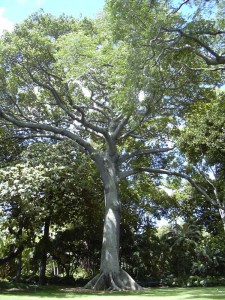 Welcome to Kapok Tree Diplomacy. The kapok tree is a towering and majestic tree native to tropical rainforests, rising to heights of over 150 feet, and providing food and shelter to hundreds of plants and animals dependent on the sunlight found above the canopy. The aim of this foreign affairs-related site is to provide a similar source of light and resources in the form of detailed inquiry into the complex issues of international relations as analyzed through the worldview and prism of the theistic Christian worldview. As a student and practitioner of international relations as well as a Christian, I tend to follow in the footsteps of a far more accomplished scholar who was well known for blending the Christian worldview into his own keen analysis of foreign affairs –